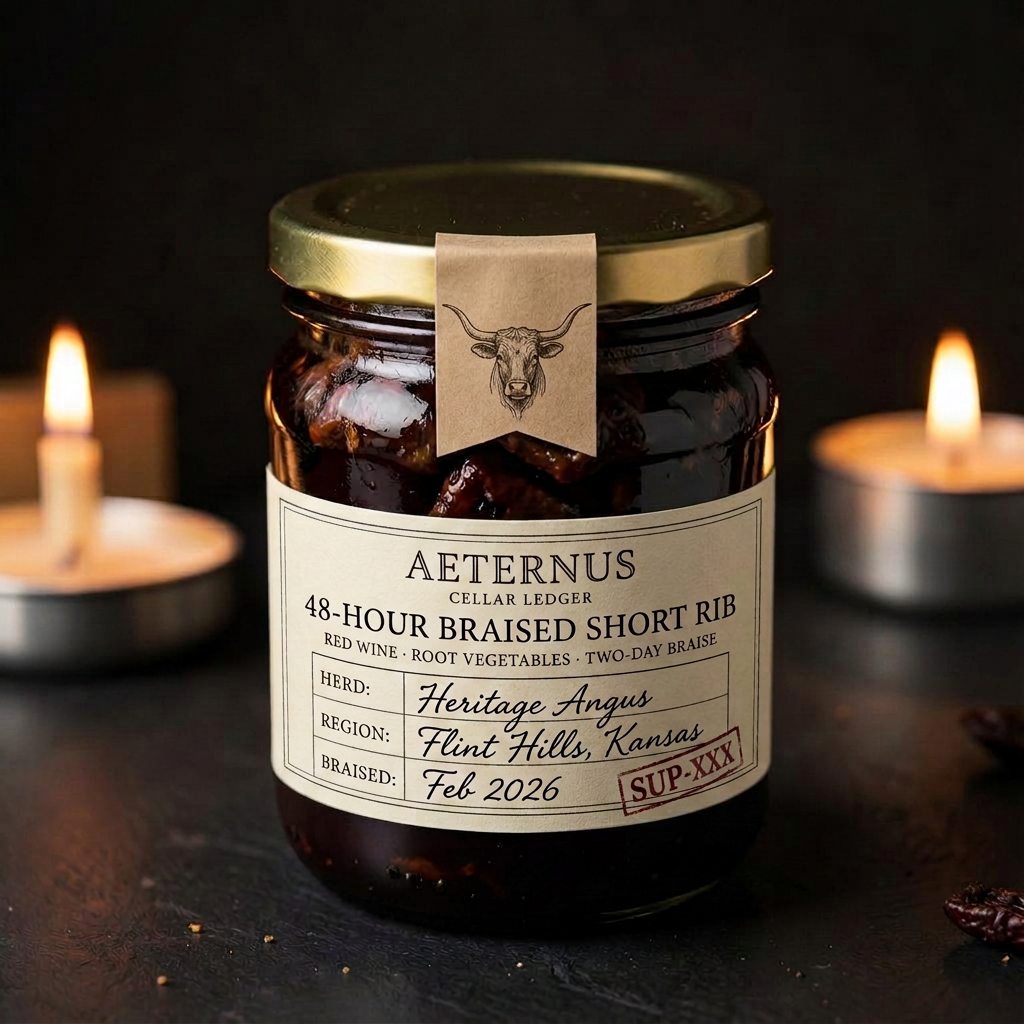
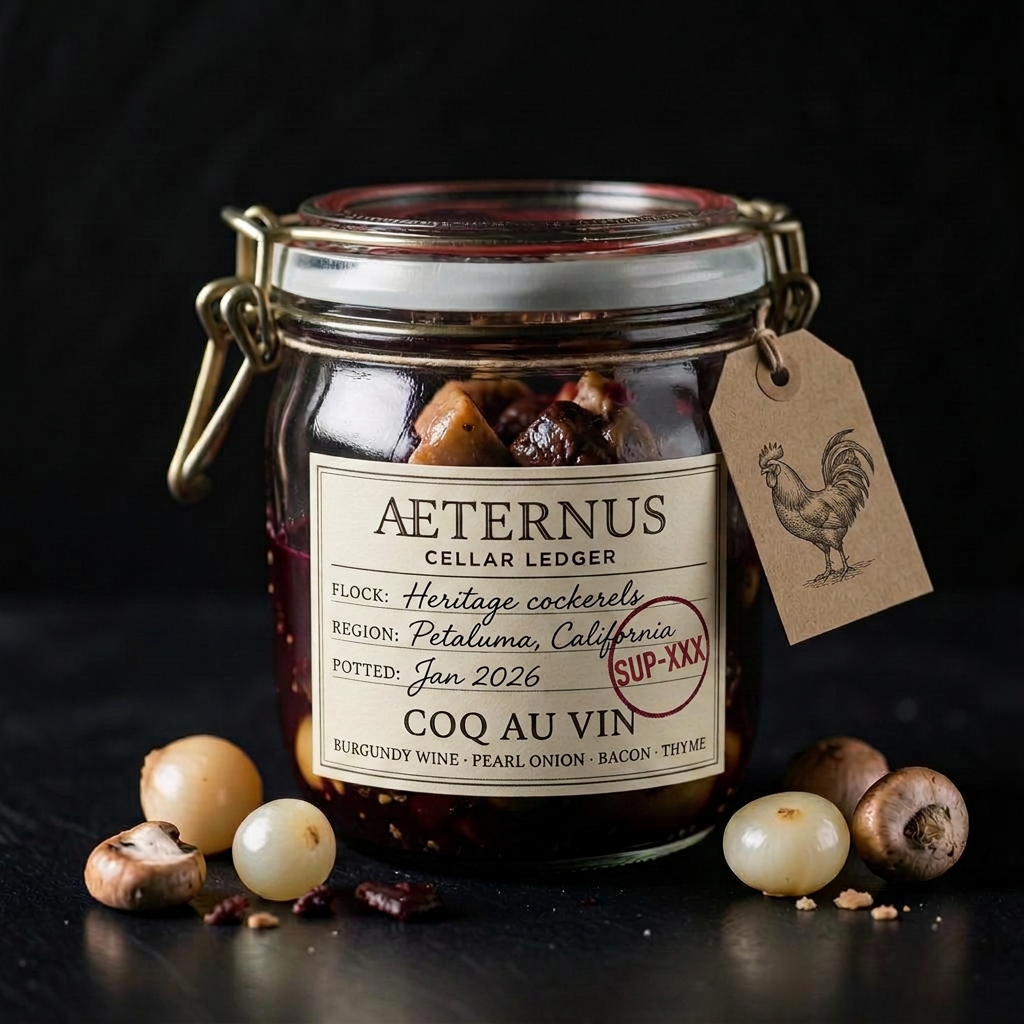
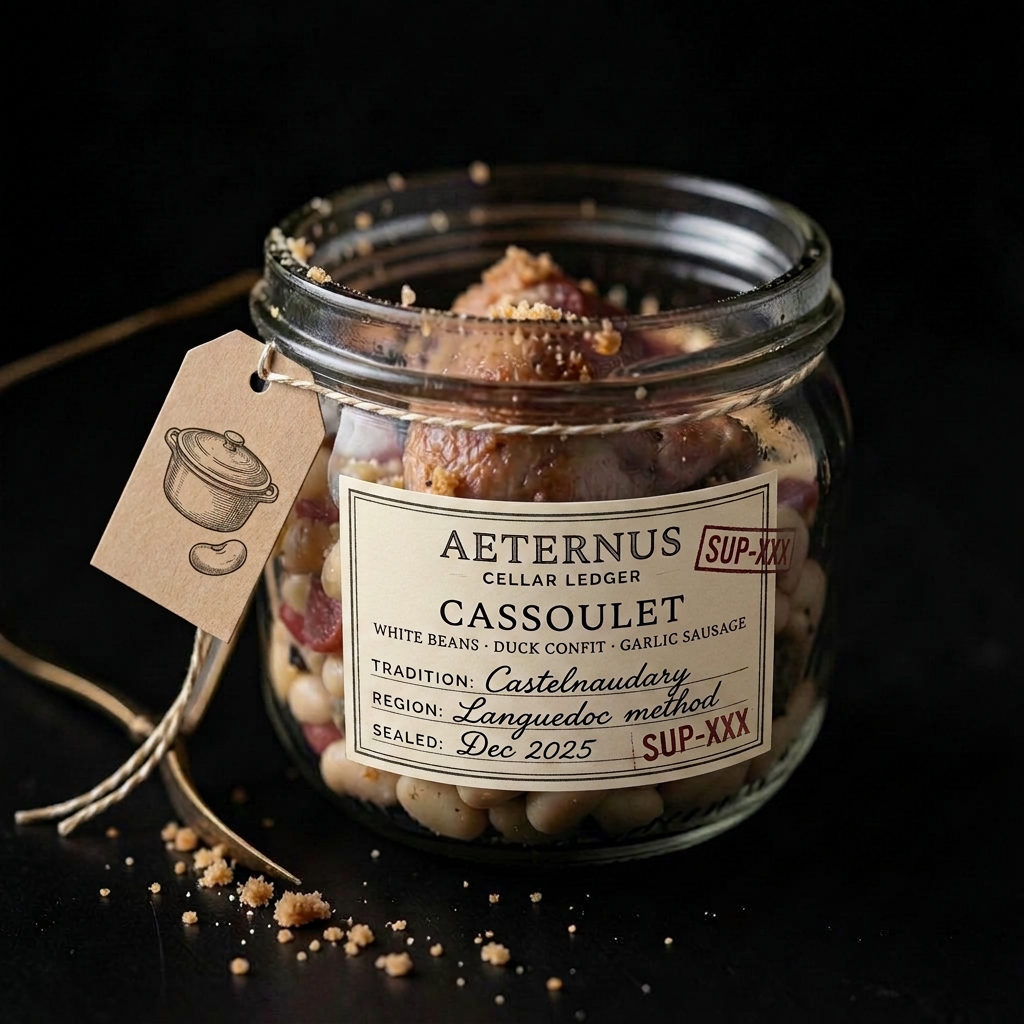
The season's fruit or vegetable
- Provenance
- Producer details will appear here when verified.
- History
- The rotating jar is how every farmhouse cellar actually worked: you preserved what was in front of you, at its single best week.
Sealed, numbered and signed by the hand that made it.
THE SUPPER COLLECTION
Whatever the season insists upon, set in copper in batches of ninety jars.
$40
Pre-launch
Release notes on the Cellar List.
Pre-launch: we're not taking orders quite yet. Add pieces to your case and it will be held for you — join the Cellar List for first notice when we open.
Intended as an ambient-storage item. Recipes, packaging and validated shelf-life vary by product — final storage and shelf-life instructions will be confirmed on the product label before release.
Preserving fruit in sugar arrived in Europe via the sugar trade through Persia and Egypt. Medieval apothecaries sold fruit conserves as medicine long before they were treated as food.
Copper is the traditional preserving pan because it conducts heat evenly, a piece of practical technique used by fruit preservers for centuries before the underlying chemistry was understood.
Small-batch fruit preserves cooked in copper are a long European tradition, prized for bright, loose-set results.
Cooking fast and shallow in a wide pan evaporates liquid quickly, avoiding the browning that long, slow cooking produces.
The set is tested by hand on a chilled plate, a traditional method that reflects whether the pectin has actually taken.
Copper-pan set
1 day, start to seal
On bread and butter, or against a hard cheese at the end of the meal.
Every defining ingredient, named where we can: what it is, and what it has meant to the people who kept it. Producer and sourcing details will appear here as they are verified.
Recipes, packaging, storage instructions and shelf-life vary by product and validated production method. Follow the instructions on the label; keep chilled items refrigerated.