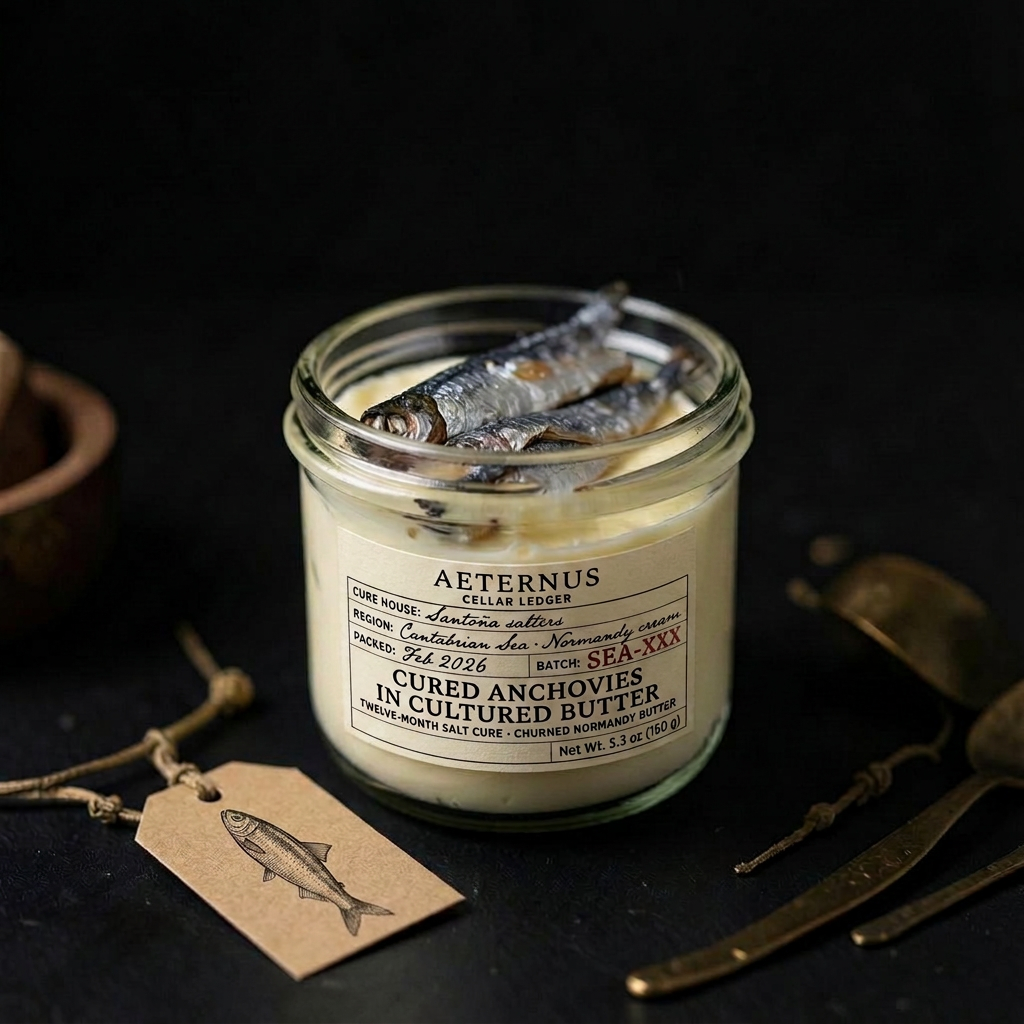
Cantabrian sardines
- Provenance
- Producer details will appear here when verified.
- History
- Rome ran on preserved small fish, and the salting houses of the Atlantic coast carried that tradition into the modern era.
Sealed, numbered and signed by the hand that made it.
THE SEA
Line-caught, hand-packed, rested six months in single-estate arbequina.
$27
Pre-launch
Release notes on the Cellar List.
Pre-launch: we're not taking orders quite yet. Add pieces to your case and it will be held for you — join the Cellar List for first notice when we open.
Intended as an ambient-storage item. Recipes, packaging and validated shelf-life vary by product — final storage and shelf-life instructions will be confirmed on the product label before release.
Packing fish in oil is Mediterranean and very old: Roman fish-salting workshops were preserving small fish on an industrial scale by the first century, and jars from those workshops have been recovered from wrecks across the trade routes.
The modern tin follows from Nicolas Appert's 1795 preserving experiments and Peter Durand's 1810 tin canister patent. Brittany and later Galicia and Cantabria turned that invention into an art: the conserva, a tinned fish deliberately aged so oil and flesh exchange character.
Tinned sardines matured in oil are a long-standing tradition of the Atlantic and Cantabrian coasts, where a well-aged tin is treated with the same care as a bottle of wine.
Sardines are brined soon after landing so their oils do not turn metallic, then grilled briefly to firm the flesh before filleting.
Packed head-to-tail so each fillet touches oil on every face, the tins rest and are turned periodically as the flesh softens and the oil takes on a faint marine sweetness.
Brine, grill, then oil-mature
6 months maturation
Straight from the tin with bread, or warmed thirty seconds and pressed onto toast.
Every defining ingredient, named where we can: what it is, and what it has meant to the people who kept it. Producer and sourcing details will appear here as they are verified.
Recipes, packaging, storage instructions and shelf-life vary by product and validated production method. Follow the instructions on the label; keep chilled items refrigerated.